

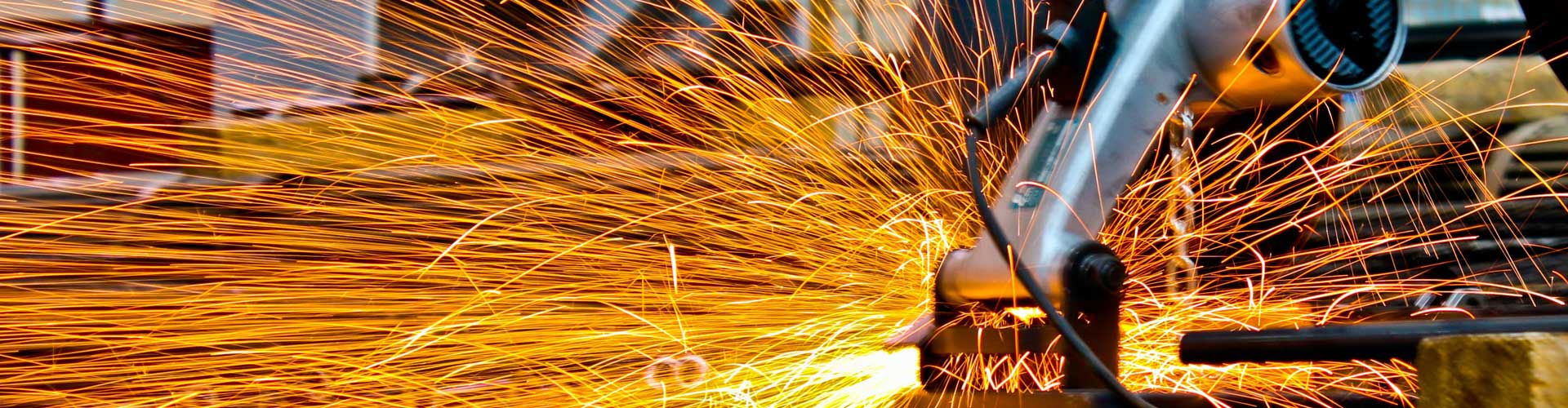
As Germany moves through 2026, it remains one of the world’s most influential industrial nations, even after several years of economic turbulence. The latest available data from late 2025 shows that the industry in Germany began to stabilize again.
Industrial production increased by 1.8 percent month‑on‑month in October 2025 and by 0.8 percent year‑on‑year, marking one of the greatest improvements since the energy‑price shock of 2022–2023. Germany’s manufacturing share of gross value added remains close to 20 percent, a level unmatched by most advanced economies and a key reason why Germany continues to be viewed as Europe’s industrial engine.
This strength is rooted in the ‘Mittelstand’, the dense network of small and medium‑sized industrial specialists that supply global markets with machinery, vehicles, chemicals, and precision technologies. Germany’s innovation capacity remains high, with strong patent activity in engineering, automotive technologies, industrial automation, and green technologies. As German companies operate across dozens of markets, they depend heavily on translation, localization, and internationalization services. Technical documentation, safety instructions, software interfaces, and regulatory filings must be adapted for global audiences. This linguistic infrastructure is a strategic pillar of Germany’s export‑driven industrial model.
Economic Output per Sector
Germany’s sectoral landscape entering 2026 reflects resilience and structural change. Machinery production grew by 2.8 percent in 2025, while computer and electronics manufacturing expanded by 3.9 percent. Construction also saw a 3.3 percent increase, supported by infrastructure investment and energy‑efficiency renovation programmes. These sectors benefited from global demand for automation, robotics, semiconductor‑related equipment, and digital infrastructure.
The automotive sector, traditionally Germany’s industrial flagship, remains under pressure. Automotive production declined by 1.3 percent in 2025, continuing a multi‑year trend shaped by slower global demand, the transition to electric mobility, and supply‑chain adjustments. Despite this decline, the automotive industry remains Germany’s largest industrial sector by turnover and export value.
Chemicals and pharmaceuticals showed moderate recovery, supported by global demand for specialty chemicals and medical products. Electrical engineering and electronics benefited from investment in digitization and industrial automation. Across all these sectors, translation and localization services are essential. German manufacturers rely on multilingual manuals, compliance documentation, localized software interfaces, and culturally adapted marketing materials to meet international standards and customer expectations.
International Trade
Germany enters 2026 as one of the world’s top exporting nations, with 2025 marked by shifting trade dynamics. The year began with front‑loading of exports to the United States in the first quarter, driven by strong demand for machinery, vehicles, and pharmaceuticals. A fallback followed in the second quarter as inventories normalized and exchange‑rate movements influenced purchasing cycles. Trade with the United States remains economically significant despite an increasingly tense political climate. German companies continue to benefit from transatlantic demand for high‑quality industrial goods, while US firms supply Germany with technology, software, and energy‑related products. The focus in 2025 and into 2026 is on supply‑chain resilience, standardization, and digital compliance. These developments are economic rather than political, but they shape the environment in which German exporters operate. Internationalization strategies play a decisive role in this context. Exporters must adapt documentation, software, and regulatory materials for US standards. Translation service providers ensure that German industrial products meet linguistic, technical, and legal requirements across state and federal levels, enabling smooth market access.
Germany within the EU
Within the European Union, Germany remains the industrial anchor despite the slowdown in growth. The EU’s single market provides frictionless access to suppliers and customers, allowing German manufacturers to operate within deeply integrated supply chains. However, the GDP contraction of −0.1 percent in the second quarter of 2025 highlights the challenges Germany faces: high energy costs, slow digitization, and demographic pressures. The EU’s push for green technologies, semiconductor independence, and digital transformation aligns with Germany’s industrial priorities, but implementation remains uneven. Germany’s leadership within the EU industrial landscape remains strong. However, the country is under pressure to modernize infrastructure, accelerate permission processes, and invest in digital capacity. Translation and localization services also play a role here, as EU regulations require multilingual compliance and German companies must adapt documentation for all EU markets.
Germany and China
China remains one of Germany’s most important trading partners in 2026. German automotive companies rely heavily on Chinese sales, while machinery and chemical producers supply key components to China’s industrial expansion. At the same time, China is a major supplier of electronics, intermediate goods, and raw materials essential for German manufacturing. This interdependence requires sophisticated internationalization strategies. German companies must navigate Chinese regulatory frameworks, adapt software and interfaces to local expectations, and ensure that technical documentation meets linguistic and cultural standards. Translation and localization providers are indispensable in this complex and rapidly evolving market.
Current Economic Situation
Germany’s economic situation in early 2026 is one of cautious stabilization. After several years of stagnation, the industrial sector shows signs of recovery, driven by machinery, electronics, and pharmaceuticals. Yet the overall picture remains fragile. The −0.1 percent GDP contraction in the second quarter of 2025 interrupted early‑year momentum, and consumer spending remains subdued. Energy prices have eased compared to the crisis years but remain above pre‑2020 levels, affecting cost structures across industries. Labour shortages persist, particularly in engineering, IT, and skilled trades. Productivity growth is slow, and investment levels remain below what economists consider necessary for long‑term competitiveness. Still, the uptick in industrial production in late 2025 suggests that the worst may be behind Germany. The challenge now is to convert this stabilization into sustained growth through modernization, digitization, and innovation.
Import & Customs Regulations
Germany’s import and customs regulations operate within the EU’s unified customs framework. Goods entering from non‑EU countries must comply with EU‑wide safety, environmental, and technical standards. Industrial imports — especially machinery, electronics, and chemicals — require detailed documentation, conformity assessments, and often multilingual labelling. This is where translation and localization services become essential. Customs declarations, safety data sheets, technical specifications, and regulatory filings must be linguistically precise. Errors can delay shipments, block market access, or trigger compliance penalties. For exporters and importers alike, multilingual accuracy is a strategic necessity.
Bottom Line
Industry in Germany in 2026 will be defined by resilience under pressure. The country remains a global manufacturing powerhouse, even as it confronts structural challenges and a shifting international landscape. The late‑2025 recovery in industrial output offers cautious optimism, but long‑term competitiveness will depend on modernization, digital infrastructure, and innovation. Across all sectors, translation, localization, and internationalization services form an invisible but indispensable layer of Germany’s industrial success. They ensure global market access, regulatory compliance, and customer trust. In a world where industrial excellence must be communicated across languages and cultures, Germany’s linguistic infrastructure is as critical as its engineering expertise.
Sources
- https://www.destatis.de/EN/Home/_node.html
- https://www.destatis.de/Europa/EN/Topic/Industry-trade-services/Industry_GVA.html?templateQueryString=industrial+production
- https://www.bundeswirtschaftsministerium.de/Redaktion/EN/Pressemitteilungen/Wirtschaftliche-Lage/2025/20250813-the-economic-situation-in-germany-in-august-2025.html
- https://www.ifo.de/en/ifo-homepage
- https://www.bundesbank.de/en/press/speeches/outlook-for-2026-in-the-light-of-multifaceted-challenges-worldwide-988530
- https://www.bundesbank.de/en/tasks/topics/slight-growth-for-german-economy-at-end-of-year-856322
- https://ec.europa.eu/eurostat/en/web/products-euro-indicators/w/6-15012026-bp
- https://www.imf.org/en/countries/deu
 Author: Eurotext Editorial Team
We explain how internationalization works, provide tips for your translation projects and outline some of the technology and processes used. We also report on current e-commerce developments and cover a range of language-related topics.