

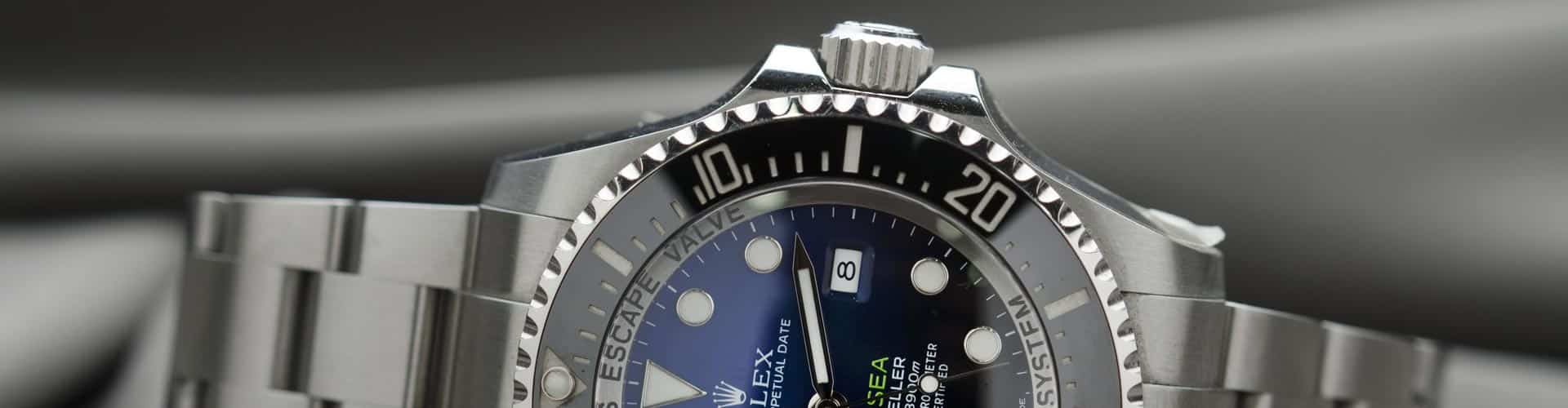
Switzerland is famous for mountains, chocolate, and a national calm that borders on mythical. Yet beneath that serene surface lies one of the world’s most capable industrial engines. The country rarely advertises its manufacturing strength, but its factories, labs, and engineering centers influence global markets far beyond its borders. In 2026, Switzerland remains a place where precision is not a cultural quirk but a commercial strategy, and where industrial innovation is treated as a long‑term investment rather than a marketing slogan.
What You’ll Learn in This Article
- A Short History of Swiss Industrial Strength
- Switzerland’s Industrial Landscape in 2026
- Switzerland’s Role in International Trade
- Automotive and Automation: Switzerland’s Quiet Strength
- Regulatory Requirements for Entering the Swiss Market
- Language Requirements and Their Impact on Market Entry
- Ecological Transformation and Industrial Sustainability
- Switzerland and the European Union
- Bottom Line
A Short History of Swiss Industrial Strength
Swiss industry grew out of necessity. With few natural resources, companies in the 19th century focused on textiles, mechanical engineering, and early chemical production. Switzerland began pushing sectors where knowledge mattered more than raw materials. By the mid‑20th century, the country had become a global center for pharmaceuticals, specialty chemicals, and precision machinery. That legacy still shapes its industrial identity today. Swiss firms tend to specialize, innovate steadily, and export aggressively. Political neutrality and institutional stability have supported long planning cycles, allowing companies to refine products and processes without the volatility seen in larger economies.
Switzerland’s Industrial Landscape in 2026
Switzerland remains one of the world’s wealthiest and most diversified economies. SECO’s June 2026 update places nominal GDP at roughly CHF 830 billion, with GDP per capita near CHF 92,000. Growth this year is expected to reach about one percent, a slight dip after the 1.4 percent in 2025. Inflation remains exceptionally low, and the Swiss National Bank has kept its policy rate at zero since March 2026 to support domestic demand and ease pressure on exporters.
Exports from Switzerland jumped 13.8% month-on-month to a more than one-year high of CHF 27.8 billion in July 2026, driven by a sharp rebound in chemical and pharmaceutical products (25.7%) and a second consecutive monthly increase in watch exports (5.8%). Shipments to Europe surged 22.9%.
The industrial structure is broad. Pharmaceuticals and life sciences continue to dominate exports, exceeding CHF 100 billion annually. Machinery, electrical engineering, and metalworking – the MEM industries – remain central to automation, robotics, and precision manufacturing. Luxury goods, especially watches, maintain strong global demand. Food and nutrition, led by Nestlé, add further stability.
Swiss SMEs make up more than 99 percent of all companies, yet many operate as global niche leaders. In early 2026, manufacturing outside the chemical and pharmaceutical sectors became a notable growth driver. Exports of non‑pharmaceutical goods rose sharply, helped by reduced US import tariffs on Swiss machinery and specialty components introduced in late 2025. As a result, industrial sentiment improved, and employment increased modestly in the first quarter of 2026. The impact of the latest 12.5% tariff increase in late June is yet to become apparent.
Switzerland’s Role in International Trade
Switzerland is one of the world’s most export‑oriented economies. Its industrial companies rely on global markets, and multilingual documentation is essential for regulatory compliance and customer support. In 2026, trade dynamics reflect both resilience and pressure. Pharmaceuticals remain dominant, but MEM industries benefit from strong demand in automation and robotics. The strong Swiss franc continues to challenge price competitiveness, yet companies offset this hurdle through innovation, service quality, and technical reliability.
Energy prices rose in early 2026 due to geopolitical tensions in the Middle East, affecting logistics and industrial input costs. Swiss firms responded with efficiency upgrades and supply‑chain adjustments. For product managers and technical writers, this environment requires continuous updates to documentation, compliance materials, and multilingual product information.
Automotive and Automation: Switzerland’s Quiet Strength
Switzerland hosts no major automotive OEMs, but it does play a crucial role in the global automotive supply chain. Its companies specialize in sensors, drivetrain components, robotics, and advanced materials. These products feed into German, French, Italian, and Asian automotive ecosystems, making Swiss engineering a quiet but essential part of global mobility.
ABB Robotics, headquartered in Zürich, remains one of the world’s leading automation and robotics companies. Its Swiss‑Swedish origins reflect the country’s international mindset, and its robots are used in automotive factories worldwide. Stäubli Robotics, although originally French, has its headquarters in Switzerland and is a major player in precision industrial robotics. Its robots are widely used in automotive, electronics, and cleanroom applications. F&P Robotics develops service and collaborative robots for healthcare and hospitality. Its flagship product, P-Care, assists in elderly care, making it a pioneer in assistive robotics. Georg Fischer, founded in 1802 in Schaffhausen, supplies piping systems, machining solutions, and lightweight components for industrial automation and mobility. Even Sonova, known for hearing technology, contributes to the sector with micro‑precision manufacturing relevant to automotive electronics.
These companies rely heavily on multilingual technical documentation, CAD data, and Industry 4.0 integration. Their global footprint makes translation and localization essential for product launches, compliance, and customer support.
Regulatory Requirements for Entering the Swiss Market
Entering the Swiss market requires navigating a regulatory environment that is very rigorous and heavily aligned with European standards. Switzerland is not an EU member, but it maintains extensive bilateral agreements that harmonize product standards, conformity assessment procedures, and safety requirements with EU legislation. Industrial companies entering Switzerland must comply with Swiss federal law, cantonal regulations, and sector‑specific rules that often mirror EU directives. For manufacturers of machinery, automation systems, automotive components, and industrial electronics, that means meeting the Swiss implementation of the Machinery Ordinance, the Electromagnetic Compatibility Ordinance, and the Low Voltage Ordinance, all of which are closely modeled on EU frameworks.
Obstacles arise not from unfamiliar rules but from the precision with which Switzerland enforces them. Documentation must be complete, consistent, and available in the languages required by the authorities. Technical files must be accessible for inspection, and conformity declarations must follow Swiss formats. Companies accustomed to broader tolerances in other markets often find Switzerland’s insistence on exact terminology, traceability, and safety labeling demanding. For Industry 4.0 products, cybersecurity requirements and data‑handling obligations add another layer of complexity, especially when cloud‑based services interact with Swiss infrastructure.
Language Requirements and Their Impact on Market Entry
Language is one of the most underestimated barriers to entering the Swiss market. Switzerland has four official languages – German, French, Italian, and Romansh – and industrial documentation must reflect this multilingual reality. In practice, German, French, and Italian dominate regulatory communication. Technical documentation for machinery, automation systems, and industrial components must be available in the language of the region where the product is sold or installed. A company entering the German‑speaking cantons cannot rely on English‑only manuals, and the same applies to French‑speaking Romandie and Italian‑speaking Ticino.
This requirement affects product managers, technical writers, and engineering teams directly. Documentation must be harmonized across languages, terminology must be consistent, and updates must be synchronized. For companies with complex product portfolios, language provision becomes a continuous workflow rather than a one‑time translation effort. The Swiss market expects clarity, precision, and linguistic accuracy, especially in safety instructions, installation manuals, and digital interfaces. Poorly localized documentation can delay approvals, complicate audits, and undermine customer trust. In a country where precision is a cultural value, language quality becomes part of the product itself.
Ecological Transformation and Industrial Sustainability
Switzerland’s ecological transition is driven by strict environmental regulations, high energy prices, and strong public support for sustainability. Industrial firms are investing in energy efficiency, circular production, and low‑carbon technologies. In 2026, electrification of industrial processes continues to accelerate, supported by Switzerland’s hydropower‑dominated energy mix. Companies in surface engineering, specialty chemicals, and precision manufacturing are developing greener materials and cleaner production methods.
Sustainability reporting has become more demanding, especially for exporters aligned with EU regulations. This trend increases the need for transparent, multilingual environmental documentation. Engineering teams and technical writers must harmonize terminology across languages and ensure compliance with digital product passports, carbon reporting frameworks, and updated machinery safety standards.
Switzerland and the European Union
Even though Switzerland is not an EU member, its economy is deeply integrated in the European single market. Bilateral agreements govern trade, labor mobility, and technical standards. For industrial companies, alignment with EU norms is essential. In 2026, regulatory updates in digital product passports, cybersecurity, and sustainability reporting require Swiss companies to adapt documentation and product information. The strong franc continues to affect price competitiveness, yet stable access to EU markets supports exporters.
For Industry 4.0 leaders, this means continuous alignment with EU digitization standards and cross‑border data flows. Swiss companies often adopt EU norms early, which helps maintain market access and reduces compliance risk.
Bottom Line
Switzerland rewards companies that operate with discipline, clarity, and long‑term focus. Its industrial environment is stable but exacting, and it expects products, processes, and documentation to meet high standards from day one. Firms that align quickly with Swiss regulation, adapt to multilingual requirements, and treat communication as a strategic asset gain a meaningful advantage. Those that underestimate these expectations discover that Switzerland’s precision is not a cultural cliché but a market reality. In this landscape, success belongs to organizations that deliver technical excellence and express it with the same rigor across every language and every channel.
Sources:
- https://www.erih.net/how-it-started/industrial-history-of-european-countries/switzerland
- https://www.seco.admin.ch/en/newnsb/fBR45uQZGzLok-BB5hKw8
- https://www.swissinfo.ch/eng/foreign-affairs/us-imposes-new-tariff-of-12-5-on-switzerland-over-forced-labour/91793008
- https://www.swissinfo.ch/eng/pharma-supply-chains/exports-picked-up-again-in-july/91927117
- https://tradingeconomics.com/switzerland/exports
- https://industrialforum.ch/en/switzerlands-mem-sector-key-players-clusters-and-trade-fairs/
- https://www.automation-list.com/en/country/switzerland
- https://www.robot-magazine.fr/en/the-robotics-market-in-switzerland-innovation-precision-and-global-impact/
- https://www.rpcs.ch/post/regulatory-environment-switzerland-investors
- https://sumas.ch/blog/5-examples-of-sustainability-in-switzerland/
 Author: Eurotext Editorial Team
We explain how internationalization works, provide tips for your translation projects and outline some of the technology and processes used. We also report on current e-commerce developments and cover a range of language-related topics.